

 The start of a new year can bring pressure to overhaul our habits — join a gym, ditch the junk food, and become a whole new person overnight. However, lasting wellness rarely comes from big, dramatic changes. It builds from the small, intentional choices we make every day.
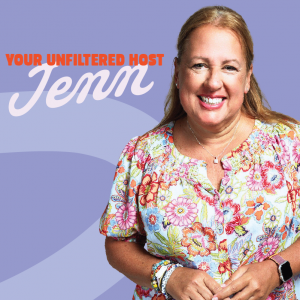
This idea is at the heart of “Just Jenn,” a new women’s wellness podcast from Hancock Health encouraging women to care for their whole selves, physically and mentally. Hosted by Jenn Wells, Hancock Health’s assistant vice president of customer experience and brand strategy, this podcast dives into topics women often feel are too uncomfortable or taboo to bring up with their friends, family, coworkers, or even healthcare providers.
“Women take care of themselves last, and that’s absolutely not what we should do,” Wells said. “We know this, but we put everything else before ourselves. We have to find a space to feel safe and change that perception to put ourselves first.”
The podcast grew out of Wells’ own experience of being “fine on paper” but not feeling like her best self. She had great doctors and normal test results, she said, but as she got older, her body, mental health, and daily life shifted in unexpected ways — including getting married and becoming a stepmom to two young kids.
Even with a supportive husband, she said, she still found herself feeling overwhelmed, exhausted, and guilty, and would compare her capacity to other women. After realizing how unhealthy this cycle was, and how many women quietly face it too, Wells made it her mission to start honest conversations about women’s health and create a space where no one feels alone.
Scheduling Basic Preventive Care
Part of Wells’ honest approach is giving women practical ways to protect their health before problems arise. Preventive care, like regular checkups, screenings, and lab work, not only helps catch illnesses early but also gives women the information they need to advocate for themselves and feel confident in their bodies.
“Women put [preventive care] off — we take care of our kids and everything else first,” Wells said. “If you don’t do [preventive care] for yourself, do it for those you love. If it gets to the point where there is something wrong, then we have something entirely different to have to deal with. We have to take care of ourselves, so we can take care of those we love.”
Preventive screenings Hancock Health recommends for women include:
- A colonoscopy. This procedure checks the colon for polyps, which can lead to colon cancer. Recommended screenings start at age 45, but women with a family history may need to be screened earlier.
- A mammogram. This test helps diagnose breast cancer early. Recommended screenings start at age 40, though women with a family history may need to begin earlier, too.
- Pap and HPV testing. This screens for cervical cancer and precancerous changes by checking for abnormal cells and HPV infections. Screenings are recommended every three years for women younger than 30. For women 30 to 65, screenings are recommended every five years.
- Skin checks. Lesions and moles can lead to skin cancer if left unchecked, especially for women with fair skin. Full-body skin checks are recommended starting at age 40.
- A bone density test. This test screens for osteoporosis, a decline in bone density that increases the risk of fractures. Screenings are recommended starting at age 50 for women with risk factors, or at 65 for all women.
- An annual physical. This visit checks blood pressure and vitals and typically includes bloodwork to evaluate cholesterol, liver enzymes, platelets, and glucose.


Lightening the Mental Load
 In her second “Just Jenn” podcast episode, “The Mental Load is Real,” Wells brings on Christina DeWitt, a licensed clinical social worker with Hancock Health, to discuss how all the responsibilities, planning, and emotional labor that often falls disproportionately on women affects their mental health.
From making sure their children have shoes that fit to remembering to reorder household supplies, DeWitt said, women often carry the bulk of this “invisible” work. Over time, this can lead to exhaustion, burnout, and even resentment.
If women are struggling to lighten their mental load, DeWitt suggests:
- Checking rhythm. Sleep, nutrition, and movement all affect mental health. Even small adjustments, like ensuring adequate rest or taking a short walk, can make a real difference.
- Addressing hormonal and physical health. Chronic stress can disrupt hormone balance, affecting mood and energy levels. Regular check-ins with healthcare providers can help women stay on top of their physical and mental well-being.
- Building in restorative alone time. Not all alone time counts. Functional alone time spent thinking about responsibilities is not recharging. Make space for true 20-30 minute mental breaks of quiet, uninterrupted time doing something enjoyable.
- Sharing the load. Open communication with partners, friends, or coworkers about household and emotional responsibilities can reduce the mental load. Delegating tasks and responsibilities, including planning and noticing what needs attention, can help distribute the workload more evenly.
- Seeking support. Therapy and coaching can provide guidance, accountability, and relief. Even an initial conversation can offer reassurance and a sense of hope.
- Starting small. Naming and acknowledging the mental load, addressing one responsibility at a time, or organizing tasks on paper can gradually lighten the burden and make caring for mental health more achievable.
Rebuilding Nutrition Habits with Telehealth
Hancock Health recognizes that everyone has unique health and nutrition needs, and guidance from licensed dietitians is more important than ever with the rise of weight-loss drugs and fad diets. Dietitians support not only weight management but also help patients manage conditions such as diabetes, kidney disease, and heart health.
To make working with a registered dietitian more accessible, Hancock Health now offers virtual nutrition therapy. These sessions can help women set realistic goals, make informed choices, and build sustainable, healthy habits. Virtual visits can fit more easily into women’s busy schedules and eliminate the commute, Wells said, saving hours compared to in-person appointments.
“It’s a win-win, whatever we can do to help people get on a better track,” Wells said. “A virtual visit is better than no visit at all. If a virtual visit is your starting point because it’s convenient for you, then that’s okay.”
Keeping the Conversation Going
Getting started is often the toughest part for women to take charge of their health, Wells said. She hopes “Just Jenn” can guide women in starting conversations with their providers or admitting when something just doesn’t feel right.
Future podcast episodes will feature more Hancock Health providers, covering vulnerable topics like menopause, autoimmune disorders, breastfeeding challenges, and more. Rather than preach or lecture, the goal is to give women a supportive resource, Wells said, so they have a safe space to discuss their health openly.
“I say, ‘Just do it,’ a lot,” Wells said. “Sometimes, it’s just that first step, and then it will get easier. Whether that’s a conversation, a visit — whatever it is, we just have to do it. The first and most important message is that you have to start somewhere. It doesn’t matter where — just somewhere.”
Listen to the latest episodes of Hancock Health’s “Just Jenn: A Woman’s Health Podcast” on Substack or Apple Podcasts.
Nicole Thomas is a writer and digital marketer inspired to prioritize her mental and physical health in the new year after listening to “Just Jenn.” You can follow her on LinkedIn.
SUPPORT LOCAL JOURNALISM
All of our content—including this article—is entirely free. However, we’d love it if you would please consider supporting our journalism with an Indy Maven Membership.
P.S. Sign up for our weekly newsletter with stories like this delivered to your inbox every Thursday!