

 I didn’t create Solace House because I had to. I created it because I kept seeing how badly it was needed.
For as long as I can remember, I have known that I wanted my life to include helping people. Over the years, I have volunteered with women’s shelters and other organizations serving people experiencing homelessness and housing instability throughout Indianapolis.
Every experience taught me something, but one lesson kept following me: the people who need housing help do not all look the same, and their circumstances do not always fit neatly into the programs that already exist.
That became even clearer to me during COVID.
My husband owns a franchise, and during COVID I spent a lot of time working alongside all different types of people. When you work beside people day after day, you learn more than their schedules and job responsibilities. You hear about their lives. You begin to understand what they are carrying when they walk through the door.
Some were dealing with unstable housing, complicated family situations, or financial hardship. Others were taking on responsibilities that the people around them might not have realized.
I found myself listening, encouraging, and helping where I could. But I also kept paying attention.
It reinforced something I had already begun to understand through my volunteer work:
Housing vulnerability isn’t limited to the traditional picture of homelessness.
A woman can be working and still not have a stable place to live. She can be sleeping in her car. She can be sleeping on a friend’s couch, moving between relatives, staying somewhere that is unhealthy because there is nowhere else affordable to go, or trying to rebuild after divorce, loss, displacement, caregiving, relocation, or another major life transition.
Adults without dependent children in their household can have an especially difficult time figuring out where to turn when they need additional support, resources, or housing.
But there are also women who fall somewhere in between.
A woman in that position may need a safe, stable, furnished place to live while she gets back on her feet. Somewhere she can stay long enough to make her next decision without worrying about where she will sleep.
That is the woman I kept thinking about.
Eventually, thinking about the gap was no longer enough.
That became Solace House Collective.
Solace House Collective is the public name of Solace House, Inc., an Indianapolis 501(c)(3) nonprofit.
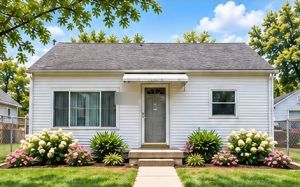 Our mission is to provide safe, stable, and dignified independent-living housing for adult women experiencing housing instability, while supporting each resident’s pathway toward financial stability, personal agency, and long-term housing independence.
We are preparing two Indianapolis homes with six private furnished bedrooms total, three women in each home. Each resident has her own bedroom, while the kitchen, living room, bathroom, and laundry areas are shared. Utilities and Wi-Fi are included, and our residences include privacy and safety features such as exterior cameras, alarm systems, and digital bedroom locks.
Our residency terms are six or twelve months because stability takes time.
The goal is not simply to get someone through tonight. It is to create enough breathing room for a woman to think clearly about what comes next. That might mean strengthening employment, building savings, improving credit, addressing a past housing barrier, or preparing for a permanent home of her own.
Most days, building Solace House means handling a lot of practical details.
Some mornings begin with an inquiry from a woman looking for housing. Then I may be reviewing an application, talking with a referral partner, working through a policy, following up with a board member, coordinating a donation, or trying to solve a furniture or transportation problem.
Compassion is not enough by itself.
Compassion needs structure behind it.

 If a woman trusts us with something as important as where she is going to live, then our job is to build an organization worthy of that trust.
One of the most moving parts of this journey has been watching other people decide that they want to help build it too.
The response has reached far beyond one neighborhood or even Indianapolis. Businesses, companies, organizations, and individuals across the United States have stepped forward with donations and introductions. They have helped us find mattresses, furniture, artwork, household goods, personal-care items, seating, blankets, and supplies we need to get the homes ready.
Every time something arrives, I think about what it represents.
A mattress is not just a mattress when a woman is starting over. A set of towels is not just towels. A desk can become the place where someone applies for a better job, organizes her finances, studies, or begins planning what comes next.
A lamp, a blanket, a piece of artwork, a lock on a private bedroom door—those things communicate something.
They say: someone thought about you before you arrived.
That outpouring has reminded me that Solace House may have started as my vision, but it is not being built by me alone.
That matters because housing instability can be incredibly isolating. It can make a woman feel as if she is carrying an entire crisis by herself.
I want the experience of walking into Solace House to communicate the opposite.
You are not invisible.
You are not an afterthought.
There is a place for you to begin again.
Because the point was never to build a program simply so I could say I founded a nonprofit.
The point was to respond to a gap I could no longer ignore.
My long-term vision for Solace House is larger than six bedrooms.
For me, progress means opening responsibly and keeping our word. It means creating a home that feels safe, dignified, and thoughtfully prepared, and helping one woman move from uncertainty to stability. Then we make the model strong enough to help the next.
And I believe that sometimes the beginning of a different future can be surprisingly simple: a private room, a locked door, a stable address, a little breathing room, and the knowledge that someone made a place for you before you arrived.
A Place to Heal. A Path to Independence. A Future of Hope.
 About the Author
Shana Readus is the Founder and Executive Director of Solace House Collective, an Indianapolis 501(c)(3) nonprofit creating safe, stable, furnished independent housing for women experiencing housing instability. Learn more at solacehousecollective.com and follow @solace_house_collective on Instagram.
SUPPORT LOCAL JOURNALISM
All of our content—including this article—is entirely free. However, we’d love it if you would please consider supporting our journalism with an Indy Maven Membership.
P.S. Sign up for our weekly newsletter with stories like this delivered to your inbox every Thursday!