

Hey kid,
 You’re not going to believe me, but by the time you’re thirty, you’ll be walking around with two brand-new hips. I know, I know — that sounds like the setup to some terrible joke about being “old before your time,” but it’s real. And it’s not the end of the world. In fact, it’s kind of the beginning. You’ll find yourself thinking everything is going to go back to “normal” after your surgeries, but what comes after is going to test you hard. Your body has its own agenda; it always has, which should bring you some level of comfort because all the pain and mental gymnastics you’ve always had to do to make it through the day – it’s all real. You’ll have to get really good at rolling with the punches, but don’t worry, you will.
It’s important to know that you’re not broken, even though you’ll spend a lot of years thinking you are. Life’s going to throw some wicked curveballs — the kind that leave scars, require a lot of prescriptions, and render a collection of “you don’t look sick” side-eyes — but it’s also going to teach you resilience in ways you can’t imagine yet. You’ll laugh in the middle of the hard stuff, cry when things finally click, and slowly learn that joy and struggle can coexist in the same house.
I’m writing this to you (and to anyone else reading who feels like they’re perpetually behind, misunderstood, or carrying around a body or brain that doesn’t cooperate) because I wish someone had written it to me. This isn’t a manual on how to fix yourself — you don’t need fixing. It’s more of a flashlight, something to shine back down the path and say: you’re not alone. You’re going to make it, and you’ll do it with more humor, grit, and compassion than you ever expected.
The Body You Never Expected
You’re going to find out you need your hips replaced while you’re traveling indefinitely around Europe (yes, that’s right — you actually get to travel indefinitely around Europe). The news is going to shock you. At first, it won’t make sense. Hip replacements are for people who collect AARP magazines, not people still figuring out how to pay off their student loans. But here’s the thing: you need them.
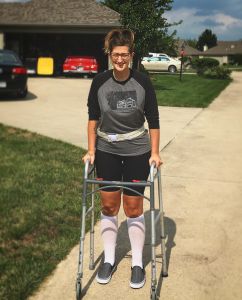 There aren’t many resources out there for thirty-year-olds who suddenly find themselves in need of new joints, so you’re going to do what you’ve always been good at — creating the thing you wish existed. You’ll start a blog to chronicle your journey, and it will connect you to other people who feel just as blindsided and out of place as you do. You’ll sit in “Hip Replacement Class” surrounded by patients old enough to be your grandparents, and yes, you’ll be the youngest one in the room. But don’t worry — you’ll get through it with the same humor that has always carried you through life.
Still, I won’t lie to you: you’ll have to mourn the body you thought you’d always have. There will be grief in realizing that the “healthy, young” narrative doesn’t fit you anymore. You’ll feel like you’ve been betrayed by your own bones. But over time, you’ll learn how to adapt. You’ll come to see those titanium hips as extended warranty parts, like a special upgrade that helps keep you moving when your original model tapped out early.
And about the pain — it’s not all in your head. Even though some people will make you feel like it is, I promise it’s real. You have a genetic condition no one will figure out until you’re well on your way to 40. Your pain is valid. You’ll eventually learn pacing (even though slowing down has never been your strong suit), you’ll learn boundaries (saying “no” becomes survival, not selfishness), and you’ll even learn to advocate for yourself in rooms where doctors don’t want to listen. That part won’t be easy, but it will change you in the best possible ways.
Most importantly, you’ll come to understand that living with a body that doesn’t always cooperate isn’t the end of your story. It’s the start of a different one — one that requires resilience, creativity, and a lot of compassion (especially for yourself).
The Brain You Don’t Understand Yet
You’re going to spend a lot of years wondering why you can never seem to do things the “normal” way. Why you’ll ace certain projects in a blur of late-night hyperfocus, then completely forget to switch the laundry three times in a row. Why your brain feels like a browser with thirty-seven tabs open, but you can’t for the life of you find the one playing music.
 Eventually, you’re going to get an ADHD diagnosis in your mid-30s. I know — you thought ADHD was just about little boys bouncing off classroom walls, not about you. But trust me, this answer is going to make so much of your life make sense. That forgetfulness? The piles of half-finished projects? The lack of motivation? The constant, low-grade guilt about being “too much” or “not enough”? Yeah. That’s not moral failure. That’s wiring.
And listen, ADHD isn’t just about the struggles. You’ll learn that the same brain that forgets to eat lunch can also build entire websites, businesses, and creative projects out of sheer curiosity and energy. You’ll figure out how to work with your brain instead of against it. (Although, spoiler: you’ll still occasionally lose your keys while they’re in your hand. Some mysteries remain unsolved.)
As for depression — that shadow is going to walk alongside you for a long time. Some days, it’ll feel heavier than others. You’ll try to “outrun” it. You’ll feel like you want to unzip your skin and step away for a while, but eventually you’ll realize you can’t. The good news? You’ll learn how to live with it without letting it steal every ounce of joy. Therapy will become a lifeline. Medications will help more than you expect. And yes, you’ll even end up sitting in a dark room once a week for a very unconventional treatment that looks a little like a sci-fi experiment, but it’ll work.
Through it all, you’ll discover that your feelings aren’t flaws to be corrected. They’re signals, reminders that you’re human. You’ll stop beating yourself up for being “too sensitive” and start recognizing that sensitivity is actually one of your greatest strengths. (It’s also the reason you cry at dog rescue commercials, but we’ll let that slide.)
So no, you’re not broken. Your brain is just wired differently — and once you accept that, you’ll find a rhythm that feels more like home.


Lessons in Resilience
Here’s what I really want you to know: you don’t need to be “fixed.” You’re going to spend a lot of time believing that once you finally get the right body, the right treatment, the right mindset, then life will start. But the truth is, life is already happening, even in the middle of all the chaos and curveballs. Healing won’t mean turning into someone else. It’ll mean learning to live as yourself, without apology.
 You’ll also learn that you can’t do any of this alone. Community is going to save you. The friends who show up with wine when you’re falling apart. The people who tell you, “Me too,” when you thought you were the only one. And then—plot twist—you’re going to find your person and she’s going to shift your life in the best possible way. Oh, SURPRISE! You’re also gay. (You didn’t see that coming, did you? HAH, yes you did.) It’ll take some time and some heartbreak to figure it out, but when you do, you’ll fall in love with a woman who feels like home. She’ll be the one making you laugh when you want to cry, and building a life with her will be one of the best parts of your story.
And through all of it, you’ll realize that hope and humor aren’t just nice add-ons; they’re survival tools. You’ll laugh at the absurdity of trying to do yoga with titanium hips. You’ll find joy in small things like dogs wrestling in the backyard or watching tomatoes ripen in the sun. You’ll make jokes when things are scary, because humor is how you hold the heaviness without letting it crush you.
That’s resilience—not being unbreakable, but learning how to soften without giving up, to bend without snapping. To trust yourself enough to keep going, even when the path looks nothing like what you planned.
In Closing
So, kid, here’s the bottom line: you’re going to survive things you never thought you could. The body that breaks your heart will also carry you through adventures you didn’t dare dream of. The brain that frustrates you will turn out to be the source of your creativity and grit. And the heart you thought was too heavy will find light again—over and over.
I know it feels right now like you’re behind, like everyone else got a roadmap while you’re just winging it. But that “winging it” is going to turn you into someone resourceful, compassionate, and strong in ways you can’t imagine yet. You’ll learn that joy and pain aren’t opposites. They’ll exist side by side, and that’s okay. That’s life.
Remember this: you’ll never be too much for the right people. You’ll never be too complicated, too sensitive, or too broken. The ones who are meant to love you will see all of you—the hips, the quirks, the scars, the mess—and still say, “Yep, she’s mine.”
So don’t waste so much time trying to “fix” yourself. You don’t need fixing. You just need to keep showing up, one imperfect day at a time. Laugh when you can. Rest when you need to. Trust yourself even when it feels impossible.
And to anyone else reading this, wondering if you’re the only one fumbling your way through a body or brain that doesn’t play by the rules: you’re not alone either. The path may be winding, but it’s still yours. And there’s so much life ahead worth living.
With love (and titanium hips),
Your older, (mostly wiser) self
Ronni Morgan is a writer, creative entrepreneur, and founder of Rooted Social Creative. She spends her days building websites, making stickers, and drinking too many iced lattes. Follow her on Instagram @ronnimorgan.
SUPPORT LOCAL JOURNALISM
Psst… Indy’s best-kept secrets? We’re spilling them. 5,500+ subscribers getting the Maven scoop every week—plus, unlock our exclusive guide to Indy’s summer hidden gems when you sign up. Your inbox (and weekend plans) will thank you. Subscribe now.